The Matching Furniture Set Myth
Matching furniture sets can make a room feel flat. Learn how shared proportions, materials and repeated details connect unlike pieces with more character.
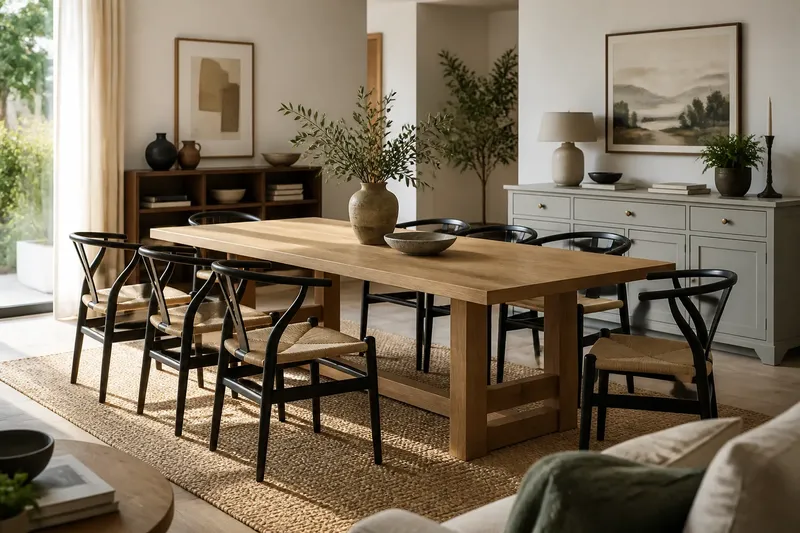
The most common mistake in furnishing a room is buying a matching furniture set because it seems like the safest route to a coherent look. The cost is often a space that feels more like a showroom than a home: every piece agrees, but nothing catches the eye. A matching furniture set is one option, not a design rule.
Coherence comes from relationships between objects, not identical finishes. A broad oak table can sit comfortably beside a narrow painted sideboard if their shapes, visual weight or details speak to each other. The aim is not to make every chair and cabinet look related by blood; it is to give the room a few clear points of connection.
Why can a matching furniture set make a room feel flat?
A coordinated set repeats the same visual signals: similar colour, finish, edge profile and scale. Repetition can make a room legible, but when every large object repeats every signal, the eye has little reason to pause. The result may feel neat yet oddly anonymous.
This is especially noticeable when the set occupies most of the room. A bed, bedside tables and chest in one finish can read as a single block of furniture, while a dining table and chairs with identical legs may blur into one another. The pieces have not become badly designed; they simply offer too little contrast to show their individual forms.
There is also a practical risk: a set can fit the retailer’s display better than the room. A bulky wardrobe beside a deep bed may crowd a small bedroom, even if both pieces belong together. Treat each item as a separate decision, and assess how its footprint and silhouette sit alongside the others.
What makes different furniture pieces feel coherent?
Choose a small number of shared cues rather than matching everything. Proportion, material, colour, shape and finish can each provide a link. One cue may be enough when it is clear; two can help if the pieces are very different.
- Proportion: Repeat a similar visual weight, such as solid, low forms, or pair a substantial table with another piece that has a sturdy base.
- Material: Let timber recur in different forms: perhaps a walnut shelf and an ash dining chair, with their distinct grains still visible.
- Shape: Echo a curve or angle in a small detail, such as rounded table corners alongside a chair with a curved back.
- Colour: Repeat a muted shade across separate pieces, while allowing their materials and shapes to differ.
- Detail: Similar handles, leg profiles or visible joinery can quietly connect furniture from different sources.
Think of these cues as a thread, not a uniform. A room with several unrelated woods can still feel joined if its pieces share a warm tone or a consistent level of visual weight. Conversely, identical wood does not automatically reconcile a spindly chair with a heavy, block-like table.
How do you mix furniture without making the room look random?
Start with the largest piece that must stay, then compare each possible addition against it. Notice whether the silhouettes compete, whether the finishes clash in temperature, and whether the pieces leave enough breathing room for their shapes to register. A quick sketch of the room or a paper outline on the floor can help reveal crowding before a purchase.
Imagine you already own a long, pale-oak dining table and want to add chairs. You choose chairs with dark, slender frames and curved backs. Their lighter visual profile gives the table a distinct presence, while the repeated curves and natural wood seats provide a connection; from across the room, the set reads as assembled with intent rather than bought as a unit.
Use contrast selectively. If the table has a strong grain and a sculptural base, quieter chairs may let it lead. If the table is plain, chairs with a pronounced curve or woven seat can add character without demanding a second focal point. The furniture should share the room, not all compete to be its headline.
Should furniture match in a small room?
No; a small room needs considered scale more than identical finishes. Several compact pieces with open legs can feel less crowded than a matching set of bulky cabinets, even if their colours differ. Check the overall silhouette and how much floor remains visible.
Repeating one material or colour can make a compact space feel connected, but use it with restraint. A timber shelf, a small table and a frame in related tones may be enough. Matching every surface can make the room feel enclosed, while one contrasting piece can provide a useful visual resting point.
Does wood furniture need to match?
No. Different woods can sit together when their undertones or visual weight are compatible. Compare them in the room’s actual light: a honey-toned beech may look warm beside walnut, while a grey-washed finish could make the same pairing feel disconnected.
Look at grain and finish as well as colour. A highly glossy surface beside rough, open-grained timber creates a stronger contrast than two matte pieces, even if their colours are close. That difference can be pleasing when it looks deliberate; repeating a related shape or tone helps make the contrast feel considered.
What should you check before buying a single piece?
Ask whether the piece earns its place on its own and whether it adds a useful relationship to what is already there. A chair need not match the table, but it should fit the room, serve its purpose and contribute something the other furniture does not.
- Check the piece’s height and visual weight beside nearby furniture; if they feel balanced, consider it, but if one overwhelms the other, look for a lighter or more substantial alternative.
- View the finish beside existing materials in the room’s light; if their tones sit comfortably together, keep it in contention, but if they jar, compare another finish.
- Look for a shared cue, such as a curve, timber tone or leg shape; if one is clear, use it as the link, but if none appears, choose a piece with a more compatible detail.
- Inspect the silhouette and surrounding floor space; if the outline has room to register, proceed to the next consideration, but if it crowds the area, choose a smaller or more open form.
- Identify what the piece adds, such as storage, seating, contrast or a focal point; if it fills a real need, weigh it against the room, but if it duplicates what is already there, reconsider it.
- Check that its intended use suits the room; if it works for the task, keep it as an option, but if it would be awkward in daily use, prioritise a more suitable design.
It is not worth chasing an exact shade of timber across multiple shops, or replacing a useful piece merely because its finish differs from the rest. Such effort can turn a flexible room into a brittle scheme. If a genuine mismatch bothers you, a lamp, cushion or smaller accessory can sometimes bridge the gap without disguising the furniture.
When planning a room, treat a matching furniture set as a convenient starting point rather than the definition of harmony. Shared proportions and materials can connect unlike pieces, while a measured contrast gives each one room to be seen. The best question is not “Does it match?” but “What makes these pieces belong together here?”